Source 250cc 4-Stroke Sports Bike for Off-road, Racing, and Trail Riding
Explore 18 listings of 250cc 4-Stroke Sports Bike options with varying displacement, power, and dimensions. Buyers can compare technical specifications and pricing to find suitable models for off-road, racing, and trail riding applications.
Key considerations
Products List


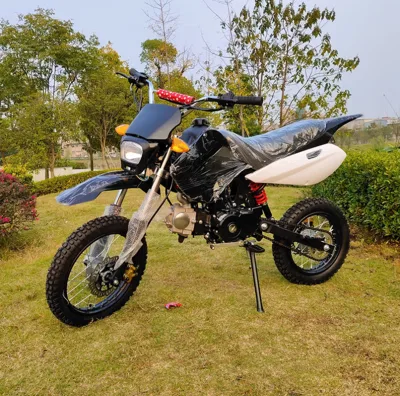
250cc 300cc Racing dirt bike 2 Stroke off Road Motorcycle Gas sport
$2829.00 - $3500.00
MOQ: 10 Pieces


Comprehensive Sourcing Guide
Strategic Sourcing Guide for 250cc 4-Stroke Sports Bikes
Understanding the 250cc 4-Stroke Performance Segment
The 250cc 4-stroke sports bike category represents a distinct segment within the global off-road and dual-sport market, characterized by a balance between high-revving power delivery and manageable weight. Unlike 2-stroke engines, which rely on a simpler two-cycle operation, 4-stroke engines offer a more refined power curve, better fuel efficiency, and lower emissions, making them increasingly preferred for competitive racing and recreational trail riding. When sourcing these vehicles, buyers must recognize that the "250cc" designation is a displacement range rather than a single fixed value. Market observations indicate that displacement figures for this class typically span from 223cc to 250cc, with specific models like the KR5 250PR-2 featuring a displacement of 249.9cc, while others may sit slightly lower at 223cc. This variance impacts the engine's bore and stroke dimensions, which in turn dictates the engine's character. For instance, a displacement of 249.9cc is often achieved with a bore of 72mm and a stroke of 61.4mm, whereas a 223cc variant might utilize a 65.5mm bore and a 66.2mm stroke. These geometric differences are critical for procurement specialists to verify, as they influence the engine's torque curve and maximum power output.
Technical Specification Analysis and Verification
A rigorous evaluation of technical specifications is the cornerstone of successful procurement in this sector. Buyers should not rely on generic marketing terms but must demand detailed data sheets that confirm specific engine parameters. The 4-stroke engine configuration is a non-negotiable baseline for this category, ensuring compliance with modern environmental standards in many jurisdictions. Power output is a primary differentiator; observed data suggests that 250cc 4-stroke models in this segment typically produce between 12kW and 14kW of maximum power. Specifically, a 249.9cc engine may deliver 14kW at 8000r/min, while a 223cc variant might produce 12kW at 7000r/min. Torque figures are equally important for off-road traction, with observed ranges falling between 17.5N·m and 18N·m at specific RPMs, such as 5500rpm or 6000rpm.
Beyond the engine, the chassis and suspension geometry define the bike's handling characteristics. Wheelbase measurements are a key indicator of stability versus agility. A longer wheelbase, such as 1460mm, generally offers better straight-line stability, which is beneficial for high-speed desert riding. Conversely, a shorter wheelbase of 1340mm enhances maneuverability in tight technical trails. Ground clearance is another critical metric for off-road capability, with observed values ranging from 310mm to 320mm. Buyers must verify these dimensions against their intended use case. Additionally, the electrical system and fuel capacity are vital for range and reliability. Battery types observed include 12V 7Ah and 12V 5Ah configurations, while fuel tank capacities can vary, with some models specifying a 5L tank. The tire specifications also play a role; standard setups often include a 80/100-21 front tire paired with a 110/90-18 rear tire, though variations exist depending on the specific model's intended terrain.
Compliance, Certification, and Regulatory Alignment
Navigating the regulatory landscape is a complex aspect of sourcing 250cc 4-stroke sports bikes, particularly when importing from manufacturing hubs like Chongqing, China. While specific certification statuses for individual suppliers cannot be assumed without direct verification, buyers must ensure that the products meet the safety and emission standards of their target market. The engine type, being a 4-stroke, is generally more aligned with Euro 4 or similar emission standards compared to 2-stroke alternatives, but this must be confirmed through official documentation.
Buyers should verify that the manufacturer provides proof of compliance with relevant international standards, such as ISO quality management systems or specific vehicle safety directives. The product origin, often listed as Chongqing, China, indicates a concentration of manufacturing expertise in this region, but it does not automatically guarantee compliance with destination country regulations. It is the buyer's responsibility to confirm that the specific model, such as the KR5 250PR-2 or KT2 250RE, has undergone the necessary type approval processes. Furthermore, packaging standards, such as the use of wooden boxes for shipping, must be inspected to ensure they meet phytosanitary requirements for international transport. Failure to verify these compliance aspects can lead to customs delays, seizure of goods, or legal liabilities.
Cost Drivers and Pricing Structure
The pricing of 250cc 4-stroke sports bikes is influenced by a combination of technical specifications, brand positioning, and order volume. Observed market data indicates a price range between $278 and $3,500 USD, a wide spectrum that reflects significant differences in quality, component sourcing, and customization options. The lower end of this range often corresponds to basic models with standard specifications, while the higher end may include premium features, enhanced customization, or higher-volume orders with specific branding.
Minimum Order Quantity (MOQ) is another critical cost driver, with observed ranges spanning from 2 to 100 units. Buyers purchasing small quantities may face higher per-unit costs due to the lack of economies of scale, whereas larger orders can negotiate better pricing tiers. Customization availability is a significant factor in cost; suppliers offering options for color schemes, branding, or specific component upgrades will typically charge a premium. Additionally, the condition of the product, which is listed as "New," implies that buyers are paying for brand-new inventory rather than refurbished units, which affects the overall cost structure. Logistics costs, including shipping from the origin point and handling of wooden box packaging, also contribute to the total landed cost and should be factored into the procurement budget.
Supplier Evaluation and Quality Assurance
Selecting the right supplier requires a thorough evaluation of their production capabilities and quality control measures. Since specific supplier names cannot be recommended, buyers should focus on verifying the manufacturer's track record and operational transparency. Key indicators of a reliable supplier include the consistency of their product specifications, such as the precise bore and stroke dimensions, and their ability to provide detailed technical documentation. The presence of customization options suggests a flexible manufacturing process, which is a positive sign for buyers seeking tailored solutions.
Quality control should be a central component of the supplier evaluation process. Buyers must inquire about the testing procedures used to validate engine performance, including maximum power and torque outputs. For instance, verifying that a 249.9cc engine consistently delivers 14kW at 8000r/min requires robust testing protocols. Additionally, the net weight of the bike, observed between 80kg and 113kg depending on the model, should be consistent across production batches. Inconsistent weight could indicate variations in material quality or assembly processes. Buyers should also assess the supplier's ability to maintain the structural integrity of the frame and suspension, as these components are critical for the safety and longevity of the sports bike.
Applications and Market Positioning
The 250cc 4-stroke sports bike is designed for a variety of applications, ranging from competitive motocross racing to recreational trail riding and dual-sport touring. The specific displacement and power output determine the ideal use case. A model with 14kW of power and a top speed of 107km/h is well-suited for high-performance racing or fast-paced trail riding, while a 12kW model with a top speed of 105km/h may be more appropriate for intermediate riders or those prioritizing fuel efficiency and ease of handling. The wheelbase and ground clearance further refine these applications; a longer wheelbase and higher ground clearance are advantageous for open terrain, while a shorter wheelbase is better for technical, twisty trails.
Buyers should also consider the fuel type compatibility, although the 4-stroke engine typically runs on gasoline. Some specifications may mention "Gas / Diesel," but this is often a generic listing and requires clarification, as 250cc 4-stroke sports bikes are predominantly gasoline-powered. The battery capacity, ranging from 4Ah to 7Ah, supports the electrical systems required for ignition and lighting, ensuring reliable operation in various conditions. Understanding these applications helps buyers align their procurement strategy with the specific needs of their target market, whether it is professional racing teams, retail dealers, or individual enthusiasts.
Long-Term Procurement and Maintenance Considerations
Sourcing 250cc 4-stroke sports bikes is not just a one-time transaction but part of a long-term relationship that involves maintenance, spare parts availability, and after-sales support. Buyers should evaluate the supplier's commitment to providing spare parts and technical support over the lifecycle of the product. The engine oil capacity, observed at 1.1L for certain models, is a standard maintenance requirement that buyers must account for in their operational planning. Similarly, the ignition system, typically CDI (Capacitor Discharge Ignition), requires specific knowledge for troubleshooting and repair.
Long-term considerations also include the durability of the frame and the availability of replacement tires and other consumables. The tire specifications, such as 80/100-21 and 110/90-18, are standard sizes that should be readily available in the global market, but buyers should confirm that the supplier can provide compatible parts if custom sizes are required. Additionally, the packaging standard, such as the wooden box, ensures that the bikes arrive in good condition, but buyers should also consider the environmental impact and disposal of these packaging materials. By focusing on these long-term factors, buyers can ensure a sustainable and profitable procurement strategy for 250cc 4-stroke sports bikes.
Comparative Specification Overview
To facilitate informed decision-making, the following table summarizes key technical specifications observed across different models in the 250cc 4-stroke sports bike category. This comparison highlights the variations in displacement, power, and dimensions that buyers should consider when selecting a supplier.
| Feature | Model A (KR5 250PR-2) | Model B (KT2 250RE) | Model C (PT3 150X) |
|---|---|---|---|
| Displacement (cc) | 249.9 | 223 | 140 |
| Engine Type | 4 Stroke | 4 Stroke | 4 Stroke |
| Max Power (kW/r/min) | 14kW / 8000r/min | 12kW / 7000r/min | 6.8kW / 7500r/min |
| Max Torque (N·m/rpm) | 18N·m / 6000rpm | 17.5N·m / 5500rpm | 9.7N·m / 5000rpm |
| Max Speed (km/h) | 107 | 105 | N/A |
| Wheelbase (mm) | 1460 | 1340 | 1240 |
| Ground Clearance (mm) | 320 | 310 | N/A |
| Net Weight (kg) | 113 | N/A | 80 |
| Battery Type | 12V 7Ah | 12V 5Ah | 12V 4Ah |
| Tire (Front/Rear) | 80/100-21, 110/90-18 | N/A | 70/100-17, 90/100-14 |
| Origin | Chongqing, China | Chongqing, China | Chongqing, China |
Note: Data points are based on observed product listings and may vary by specific production batch. Buyers should verify all specifications with the supplier before finalizing orders.
In conclusion, sourcing 250cc 4-stroke sports bikes requires a meticulous approach that balances technical performance, regulatory compliance, and cost efficiency. By understanding the nuances of engine displacement, power delivery, and chassis geometry, buyers can make informed decisions that align with their specific market needs. The wide range of available options, from 223cc to 250cc, offers flexibility for different riding styles and applications, but careful verification of specifications and supplier capabilities is essential to ensure a successful procurement outcome.
FAQs
What is the displacement range for 250cc 4 stroke sports bikes?
Displacement typically ranges from 223cc to 250cc, with specific models like the KR5 250PR-2 featuring 249.9cc. Some variants may sit slightly lower at 223cc, while others exceed 250cc. Buyers must verify exact figures on data sheets to ensure compliance with class definitions.
How much power do these 250cc 4 stroke sports bikes produce?
Maximum power output usually falls between 12kW and 14kW at specific RPMs. A 249.9cc engine may deliver 14kW at 8000r/min, while a 223cc variant might produce 12kW at 7000r/min. Torque figures generally range from 17.5N·m to 18N·m for optimal off-road traction.
Which engine configuration is standard for this bike category?
The 4-stroke engine configuration is a non-negotiable baseline for this category to ensure compliance with modern environmental standards. Unlike 2-stroke engines, 4-stroke models offer a refined power curve and better fuel efficiency. Buyers should confirm this specification to avoid non-compliant units.
What are the typical wheelbase and ground clearance dimensions?
Wheelbase measurements range from 1340mm for agility to 1460mm for stability. Ground clearance typically falls between 310mm and 320mm to handle rough terrain. These dimensions dictate handling characteristics, with longer wheelbases benefiting high-speed desert riding and shorter ones aiding technical trails.
Can buyers customize these 250cc 4 stroke sports bikes?
Customization is available for color schemes, branding, and specific component upgrades. Suppliers offering these options typically charge a premium based on the complexity of the request. Buyers should verify the extent of customization capabilities before placing orders to ensure the final product meets their specific requirements.
What is the price range for sourcing these bikes?
Observed market data indicates a price range between $278 and $3,500 USD. This wide spectrum reflects differences in quality, component sourcing, and order volume. Lower prices often correspond to basic models, while higher prices may include premium features or larger order volumes with specific branding.